| Roof
Timber Mould, Rot and Damp | Property Repair Systems 01626 331351 | ||
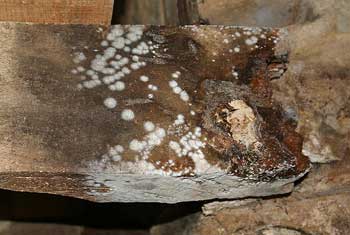
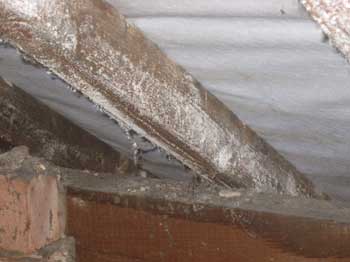
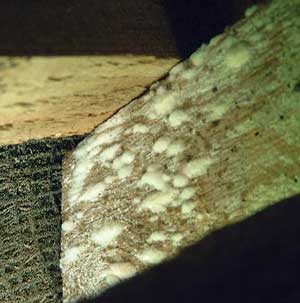
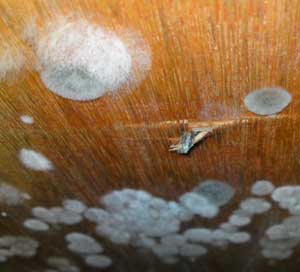
| Mold on roof timbers. Roof Moulds growing in Condensation. | |||
How to roof timber mould, rot and damp - Order and Free Technical Help - 01626 331351 - Kathy, David or Angela answers your call - discuss your building problem with a Qualified Dampness Expert (C.R.D.S.) | |
| Types of defect | |
|
Generally water leaks and poor ventilation, leading to condensation are the main roof defects which give rise to a variety of fungi, moulds and insect attacks. Re-roofing with lining (sarking, roofing felt) can cause severe mold growth and rot due to poor ventilation. 1. Mould - white, blue or black spots on timber, lining felt, masonry: indicates condensation - increase ventilation, (add soffit or ridge vents), apply Mould Cleaner, treat with Boracol 10RH.
2. Dry rot - on timbers and masonry - cut out the rot, apply Boron Powder at 10% in water, plus Gel, Paste and Rods where specified (this fungus requires a specialist inspection by a qualified timber surveyor. We can supply details of such surveyors in most parts of the UK.
3. Wet rot - in timbers indoors and outdoors - cut out the rot, apply Boron Gel, Paste and Rods to the sound timber over 18% moisture content.
4. Insects - Woodworm and Death Watch Beetle prefer damp conditions - apply Boron Powder in water, plus Gel and Paste to heavy infestations of woodworm and for Death Watch Beetle.
5. Chemical stains - white stains and crystals on timbers, can indicate water penetration - check for leaks. Clean down, apply Salt Neutraliser.
|
Mold growing on a damp roof timber in a wall
Mould growing on a Rafter - note new lining |
| Example | |
| Hampton Court - after the fire in the Cartoon Gallery - Boron in glycol was 'blown' into the ceiling voids below the gallery to eradicate mould and fungal growths, which were active because of the water pumped into the building above during the fire.
| |
| How to treat Dry Rot | |
|
1. Remove the source of moisture, ventilate, control humidity 2. Cut out the decay to sound timber/plaster, if structurally beyond repair 3. Apply Boron Ultra 12 powder in water by spray to timber and masonry, brush on Boron Ultra Gel to end grain and vulnerable surfaces, inject Boron Ultra Paste and insert Boron Ultra Rods to 8-10mm holes drilled to prescribed hole pattern, to surrounding areas at least 300mm in all directions from the limits of the attack and to all timbers at or above 18% moisture content Boron Ultra Paste injected into a lintol, awaiting plugs | ![]() |
| Example | |
| Telegraph and Electricity Poles - these are susceptible to rot after the creosote treatment has diminished, especially in the ground zone, where splits and shakes allow moisture and air into the core. Boron Ultra Paste and Boron Ultra Rods are used in combination to prevent further decay and extend the working life of the poles. Telegraph Pole being drilled to receive Boron Rods and Paste | ![]() |
| How to treat Wet Rot | |
|
1. Remove the source of moisture, ventilate, control humidity 2. Cut out the decay to sound timber, where structurally weakened beyond repair 3. Apply Boron Ultra Gel to end grain and vulnerable surfaces, Boron Ultra Paste and Boron Ultra Rods to 8-10mm holes drilled to prescribed hole pattern in timbers at or above 18% moisture content The Log House, wet rot | ![]() |
| Example | |
| The Log House, near Lymington - wet rot decay had destroyed a large number of logs on the weather side of this £1.5 million + home, facing Southampton Water. Boron Ultra Paste and Boron Rods were installed in the remaining sound logs to provide long term protection. The Log House, wet rot being dug out | ![]() |
| How to treat Woodworm | |
|
1. Remove the source of moisture, ventilate, control humidity 2. Cut out the decay to sound timber/plaster and/or de-frass 3. Apply Boron Ultra 12 by spray to timber, Boron Ultra Gel to end grain and heavily attacked surfaces. Barn awaiting treatment for common furniture beetle | ![]() |
| Example | |
| Antique rocking horse - heavily attacked by Common Furniture Beetle. Sprayed with Boron Ultra 12, plus Boron Ultra Gel to end grain and heavily attacked surfaces. Rocking horse with woodworm | ![]() |
| How to treat Death Watch Beetle | |
|
1. Remove the source of moisture, ventilate, control humidity 2. Cut out the decay to sound timber 3. Apply Boron Ultra 12 by spray to timber, Boron Ultra Gel to end grain and vulnerable surfaces and Boron Ultra Paste to 8-10mm diameter holes drilled to prescribed hole pattern, to surrounding areas at least 300mm in all directions from the limits of the attack and to all timbers at or above 18% moisture content. Death Watch Beetle in wet rot to oak beam |
![]() |
| Example | |
| Bindon House Hotel - the roof tie beams were badly affected by Death Watch Beetle, Wet Rot and Dry Rot. These were replaced with TYPE E Timber-Resin Splice Units and the timbers were treated with Boron Ultra 12 by spray, Boron Ultra Gel to end grain and vulnerable surfaces and Boron Ultra Paste by injection. Bindon House - beautifully restored | ![]() |
| How to treat posts and frames | |
|
Posts in the ground - use our special 'Save a Post' kit - drill holes in all four sides at ground level downwards at a 45 degree angle to overlap within the post beneath the ground. Blow out the holes. Inject Boron Ultra Paste to the base of the hole and insert a Boron Ultra Rod through the paste. Frames and door legs - drill 8-10mm diameter holes above and below each joint to within 15mm of the opposing face. Blow out the holes. Inject Boron Ultra Paste to the base of the hole and insert a Boron Ultra Rod through the paste.
Railway Engineer detecting rot in sleepers | ![]() |
| Example | |
| Railway Sleepers - yes, these enormous, creosote treated timbers do rot and Railtrack have used 1000s of Boron Ultra Rods, but in a much larger size, to extend the life of these expensive components. Special carriage mounted Ultra Sound machines detect the rotting sleepers and these are then drilled, injected and capped as part of regular maintenance. Railway Engineer install Boron Ultra Rods in sleepers
WOOD PRESERVATIVE AND BIOCIDE SAFETY Use wood preservatives and biocides safely. Always read the label and product information Data Sheet before use. Wear the correct safety equipment and keep unprotected people and animals out of the treated area for the statutory period given on the label. All products have some hazards and the COSHH Regulations (Control of Substances Hazardous to Health) apply to ALL building repair and construction products that we sell, even Cement. If
in doubt consult us for free technical help. Take care not to contaminate soil,
waterways or the environment with the product or the waste and packaging. Home | Repairs | Beams | Roof | Mold | Dry Rot | Privacy Policy | Returns Policy | Contact
|
Property
Repair Systems |